STIFF AND SORE ACHILLES TENDONS
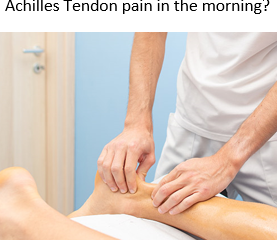
If you suffer from stiff and painful ankles in the morning it may be a sign you are suffering from Achilles tendinopathy. The following blog will give you the tools to better understand and manage the pain and stiffness and start the healing process.
Achilles Tendinopathy definition
- Achilles Tendinopathy describes the pain and dysfunction in the Achilles tendon mainly due to overuse injuries.
- Studies have shown that it can affect up to 29% of runners.
There are two types of Achilles tendinopathy:
- Insertional tendinopathy which affects the lower portion of the tendon where it connects to your heel.
Mid portion tendinopathy which affects the mid-section of the tendon.
Achilles Tendinopathy Causes
Typically it is caused when there is excess strain forced on the tendon that it cannot cope with. For example, suddenly increasing your running distance, hill running or oing for a long run after being physically inactive for some time. When the tendon becomes irritated typically any action that involves the tendon then causes pain. Symptoms increase while weight bearing on the tendon after rest and can be difficult to control if not addressed. It is also important that your running shoes have enough support and that the heel tab of the shoe fits your foot properly to protect your Achilles tendon.
How to Promote Healing
In order to begin promoting healing of the tendon you need to reduce the inflammation by decreasing the total workload (this does not mean complete rest). Gradually building up your exercises is a great way to start as you will begin to strengthen the tendon and increase the amount of load it can tolerate while also reducing pain. It is important that the exercises you are performing are at the right load and intensity for you as starting too high can cause more pain which you may feel the following morning. Typically it begins with low load exercises that are gradually increased in line with your tendon recovery and strength.
In conclusion:
- Achilles tendinopathy is an overuse injury as a result of an increase of load and intensity on the tendon.
- Reducing activity levels along with starting a personalised rehab programme are important steps to begin the healing process. Your rehab exercises will help regenerate the tendon compared to complete rest.
- Monitoring your pain for 24 hours is quite important to see if the intensity set is right for you and to let your physiotherapist know if you are feeling more pain in the morning than normal due to your exercises.
Whether you are running the Dublin city marathon or a local 5km, book in for a consultation with one of our physiotherapists to make sure you are running ready and to prevent any injuries.